
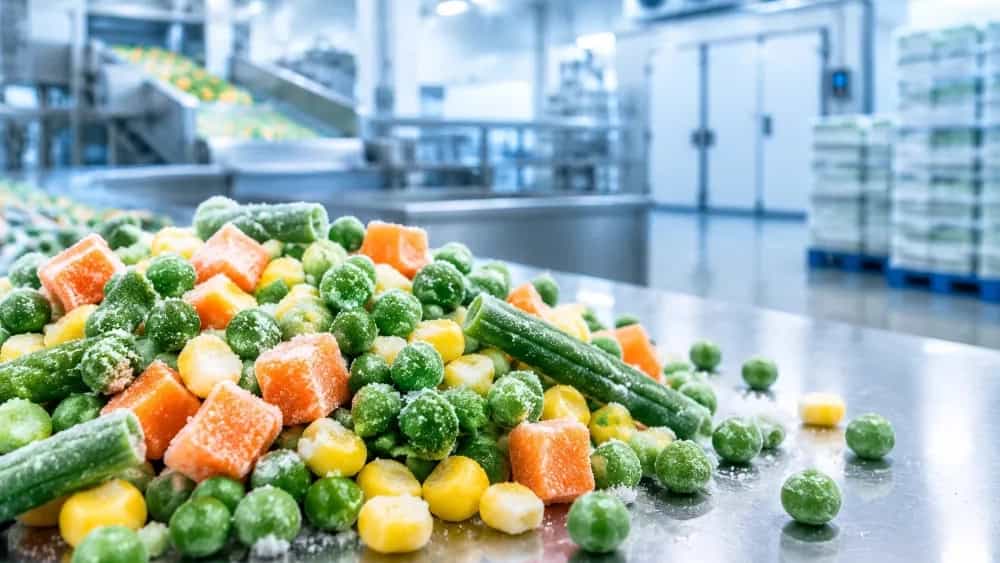
In today's world, in order to respond to the needs of consumers and better manage the production processes, food industries need raw materials that have the right quality, good shelf life and easy to use. Vegetables are one of the most important food groups that are widely used in the preparation of various home-made foods, semi-prepared products, restaurant foods and industrial products. However, keeping fresh vegetables in high volume, managing waste and maintaining their quality in all stages of distribution are important challenges for businesses active in the food industry.
In such a situation, producing and supplying sustainable quality frozen vegetables for businesses has become a practical solution for better management of raw materials. The use of frozen vegetables helps food chains to be more efficient in purchasing planning, inventory control, food preparation and supply chain management.
Frozen vegetables can maintain an acceptable quality during the storage period if appropriate raw materials are selected, hygiene principles are followed, processing is done correctly and the cold chain is maintained. This feature is very important for restaurants, hotels, catering, food factories, food preparation centers, and stores that supply frozen products.
Meanwhile, choosing a suitable collection for supplying food products is one of the factors affecting the stability of quality and continuity of business activity. Hirkan autumn leaf company can be noticed by businesses in the way of conscious choice of frozen vegetables by focusing on the introduction and supply of products related to the needs of the food industry.
In this article, we examine the importance of frozen vegetable production, processing steps, quality control criteria, benefits of using frozen products, and the role of the supplier in creating a reliable supply chain.
What is the production and supply of frozen vegetables?
Production and supply of frozen vegetables is a set of activities that begins with the selection and preparation of primary vegetables and after the steps of preparation, processing, freezing, packaging and storage, reaches the distribution of the product to consumers or different businesses.
The main goal of this process is to provide a product that is compatible with the needs of the target market in terms of quality, health, usability and maintenance conditions. To achieve this goal, each step must be done according to technical and sanitary principles.
Frozen vegetables may include products such as peas, corn, carrots, green beans, spinach, cauliflower, broccoli, and various combinations of vegetables. Also, some products are offered in a mixed form and suitable for specific applications in cooking and food industry.
Production and supply of frozen vegetables is not only limited to freezing vegetables; It also includes managing the quality of raw materials, controlling the production process, choosing the right packaging, maintaining the standard temperature, and planning the distribution carefully.
For businesses that have continuous consumption and a high volume of vegetables, it is important to pay attention to all these steps. Any weakness in processing or storage can affect product quality and cause problems in food preparation or industrial production.
Why do businesses need frozen vegetables?
1. Regular access to raw materials
One of the challenges of food businesses is the continuous supply of raw materials throughout the year. Seasonal changes, weather conditions, fluctuating crop yields and transportation problems can affect access to fresh vegetables.
The production and supply of frozen vegetables makes it possible for the products to be processed at the right time and stored for consumption in later periods. In this way, businesses can plan more precisely for their raw material supply.
2. Reduce preparation time
Many frozen vegetables go through the steps of cleaning, washing, separating inappropriate parts and cutting before packaging. As a result, an important part of the preparatory activities of the kitchen or production line has been completed.
This feature is very important for restaurants, catering and food factories that face a high volume of orders or production. Using a ready-made product can reduce the time needed to prepare raw materials and make the work process more regular.
3. Better inventory management
Fresh vegetables usually require careful management of consumption time and storage conditions. On the other hand, frozen vegetables allow for more planned storage if they are kept at the right temperature and the manufacturer's instructions are followed.
This helps businesses to coordinate raw material inventory with consumption and avoid scattered and unnecessary orders.
4. Reduce food waste
A significant portion of vegetable waste may be related to spoilage, improper cleaning, over-purchasing, or improper storage. Choosing the right frozen vegetables can reduce some of these challenges; Especially when the product is prepared according to the volume of consumption.
However, freezing alone does not prevent lesions. It is also necessary to properly manage the inventory, maintain the cold chain, observe the expiration date, and prevent improper melting and refreezing.
The main stages of producing high-quality frozen vegetables
The final quality of frozen vegetables depends on a series of continuous actions. If the right raw materials are not selected or any step of the production process is not performed correctly, the final product may be far from the expected standards in terms of color, texture, taste or food safety.
Selection and supply of raw materials
The first step in the production of frozen vegetables is to choose healthy and suitable raw materials. The type of vegetable, the level of ripeness, freshness, apparent health and harvesting conditions are among the factors that should be taken into consideration at this stage.
Vegetables that are selected for processing must be in harmony with the characteristics of the final product and the intended application. For example, the selection criteria for frozen peas may differ in terms of size and uniformity from the selection criteria for carrots or green beans.
Providing raw materials from traceable sources and implementing input controls will help to create more consistency in product quality.
Cleaning and washing
After receiving the raw materials, the vegetables should be checked for the presence of soil, plant residues and inappropriate parts. Proper washing with proper water and using hygienic methods play an important role in reducing surface pollution.
At this stage, the equipment and the production environment must also be maintained according to health requirements. Keeping equipment clean, controlling water quality, and preventing cross-contamination are measures that help increase product safety.
Separation and cutting
Depending on the type of vegetable, the unusable parts may be separated or the product may be cut into pieces of a certain size. The uniformity of the size of the pieces can help improve the appearance of the product and create more harmony during cooking.
In the production of mixed frozen vegetables, the size of the pieces and the composition ratio of raw materials are particularly important; Because the big difference between the size of the components can affect the appearance quality and the way to use the product.
Blanching or controlled precooking
Some vegetables undergo a process called blanching before freezing. In this method, the product is exposed to hot water or steam for a certain period of time and then it cools down quickly.
Blanching can reduce the activity of some enzymes affecting the quality loss and help preserve the color, taste and texture of vegetables during storage. Of course, the method and conditions of this step should be appropriate to the type of vegetable; Because not all products require the same instructions.
Fast freezing
Freezing is one of the basic steps in the production of frozen vegetables. The speed and suitable conditions of freezing affect the texture structure of the product.
In many production lines, quick freezing methods are used to reduce the temperature of the product in a suitable time. The formation of ice crystals and the method of freezing can affect the texture of the product after defrosting or cooking.
To achieve stable quality, freezing equipment should be selected and properly controlled according to production capacity and product characteristics.
Packaging and storage
After freezing, vegetables are placed in suitable packaging. The packaging should protect the product from contamination, physical damage and inappropriate environmental conditions.
Product information, storage conditions, production date and other required specifications must be included according to the relevant requirements. Then the product is stored in a suitable cold environment to be ready for distribution.
At this stage, it is very important to maintain the right temperature and prevent adverse temperature fluctuations.
Production and supply of frozen vegetables with sustainable quality
Constant quality means that the product has expected features as much as possible in different orders. For businesses that provide their raw materials continuously, quality consistency is very important.
Production and supply of sustainable quality frozen vegetables for businesses is possible when there are specific criteria for evaluating raw materials, production process, packaging and storage.
Standardization of the production process
In a standard process, the steps of washing, cutting, possible pre-cooking, freezing and packaging are carried out according to specific instructions.
Recording the important parameters of production and checking the results of each stage allows the identification of deviations. This approach helps the manufacturer to better identify the cause of possible differences in quality and take appropriate corrective actions.
Quality control of raw materials and finished products
Quality control should start from receiving the vegetables and continue until the final product. Examining the appearance of health, the size of the pieces, color, texture, packaging conditions and compliance with the specified specifications is a part of this process.
It is also important to comply with food safety requirements and perform the required tests based on the type of product and related regulations.
Maintaining a cold chain
One of the most important factors in maintaining the quality of frozen vegetables is observing the cold chain from the time of freezing to delivery to the customer.
Transportation with appropriate equipment, controlling the temperature of the storage area and preventing unwanted melting of the product are essential measures in this field. Interrupting the cold chain may reduce product quality and affect its safety.
For this reason, when choosing a supplier, businesses should also consider the ability to manage the conditions of storage and distribution of frozen products.
Types of frozen vegetables and their use in the food industry
Frozen vegetables are available in different shapes and combinations, and each has a specific use in cooking or industrial production. Choosing the right type should be done based on the production process, recipe and consumer needs.
Frozen peas
Frozen chickpeas are used in the preparation of all kinds of food, soup, mixed rice, prepared foods and semi-prepared products. Relatively uniform size and ease of use are the features that make this product suitable for commercial kitchens.
frozen corn
Frozen corn is used in the preparation of salad, soup, pizza, mixed foods and some industrial products. The quality of seeds, color and uniformity of the product are important criteria for its evaluation.
Frozen carrots
Frozen carrots may come in diamond, ring, or other pieces. This product is used in the preparation of soup, vegetable feed, ready meals and various combinations.
Frozen green beans
Frozen green beans are used in the production of all kinds of feed, ready meals, vegetable combinations and products suitable for industrial kitchens. The uniformity of cutting and maintaining the proper texture are important features of this product.
Frozen spinach
Frozen spinach is used in preparing soups, sauces, food, some mixed foods and processed products. Choosing the right product and following the recommended consumption method can help maintain the quality of food.
Mixed frozen vegetables
Frozen vegetable mixture is prepared by combining two or more types of vegetables and is a practical option for businesses that need diverse and ready raw materials.
In these products, the composition ratio of the raw materials, the size of the parts and the quality of each component are important. The composition must be in harmony with the intended application to create a favorable result during cooking.
Advantages of using frozen vegetables in restaurants and catering
Restaurants and caterers usually have to prepare a large amount of food in a certain time. For this reason, it is very important to choose raw materials that simplify the preparation process.
Faster food preparation
Vegetables that are pre-cleaned and cut require less time for initial preparation. This topic can help to better manage the activities of employees during peak hours.
Of course, the final cooking time depends on the type of vegetable, the size of the pieces, and the recipe, and should be adjusted based on the characteristics of the product.
Greater coordination in food production
In professional kitchens, the reproducibility of the result is important. Using ingredients with fixed specifications, along with a standard recipe, helps reduce variation between meals.
For example, using a combination of vegetables with a specific ratio can make it easier to prepare large meals and allow for more precise control of raw materials.
Better planning for ordering raw materials
Caterers and restaurants can adjust their frozen vegetable supply plan by checking the amount of consumption and storage capacity.
This method helps to reduce emergency purchases, inventory control and better coordination between ordering raw materials and food production schedule.
The role of frozen vegetables in food factories
Food production factories need raw materials whose characteristics are compatible with the industrial process. Size uniformity, acceptable quality, traceability and supply continuity are important factors in choosing frozen vegetables for these collections.
Use in prepared and semi-prepared foods
Frozen vegetables are used in the production of ready meals, packaged foods, soups and some semi-prepared products. The use of these raw materials can simplify part of the preparation steps in the factory.
However, the manufacturer must ensure that the type of product is compatible with the thermal process, formulation and storage conditions of the final product.
Use in the production of soup and feed
In the production of soups and industrial feeds, it is important to choose vegetables with the right size and specific characteristics. A large difference in the size of the pieces can affect the appearance of the product and the way it is cooked.
For this reason, determining the technical specifications of raw materials and controlling the quality of each shipment are essential measures for food factories.
Continuous supply for production lines
Industrial production lines usually operate according to a certain schedule. A delay in receiving raw materials may cause a disruption in the production schedule.
Production and supply of frozen vegetables should be done according to consumption capacity, order schedule and factory maintenance conditions. Coordination between the buyer and the supplier can help reduce possible disruptions.
How to choose the right supplier of frozen vegetables?
Choosing the right supplier is one of the most important decisions for businesses that depend on frozen vegetables on an ongoing basis. An informed choice should be made based on real product information and the ability to respond to the needs of the collection.
Checking the specifications and quality of products
Before cooperation, the type of vegetables, cut shape, packaging specifications, storage conditions and product use should be determined. If possible, evaluating the product sample and checking its performance in the cooking or production process can also be useful.
Attention to continuity of supply
Businesses with high consumption should be able to meet their needs in a planned manner. Supply capacity, coordination of orders and the possibility of planning for delivery are important criteria in choosing a supplier.
Evaluation of transportation conditions
In the case of frozen products, proper transportation is especially important. It is necessary for the distribution conditions to be such that the product remains within the recommended temperature range along the way.
Information transparency and traceability
Clear information about the product and the possibility of tracking shipments help to better manage purchases. This issue is especially important for food factories and collections that have a formal quality control process.
Hirkan autumn leaves company; Along with businesses in the way of supplying frozen vegetables
Choosing the right supplier is a part of raw material management strategy in food businesses. Collections that operate in the field of restaurants, catering, prepared foods and food industries, need products that are compatible with their work schedule and technical requirements.
Hirkan Autumn Leaf Company can emphasize the importance of quality, transparency of information and conscious selection of raw materials in introducing and providing products related to the needs of food businesses.
For professional buyers, it is very important to know the characteristics of frozen vegetables and match them with the needs of the collection. Factors such as the type of vegetables, the quality of raw materials, the size of the pieces, the conditions of packaging and the way of storage should be taken into consideration in the evaluation of the product.
Also, paying attention to the principles of cold chain and order planning can help businesses to manage their raw materials in a more orderly manner.
For the final selection, businesses should review the actual product specifications and supply conditions to ensure that the selected option is compatible with their operational needs, health requirements and storage capacity.
The importance of packaging in the production and supply of frozen vegetables
Packaging is one of the important components of the production and supply chain of frozen vegetables. Proper packaging should protect the product from contamination and physical damage and provide the necessary conditions for storage and transportation.
In choosing the packaging, the type of vegetable, the amount of consumption, the method of use and the storage conditions should be considered. For example, the packaging needed by a high-traffic restaurant may be different in terms of volume and ease of use from the packaging suitable for retail stores.
The packaging must be strong enough and have a good resistance against the normal conditions of transportation. Also, the information about the product, storage conditions and expiration date should be included clearly and according to the regulations.
Choosing the right size of packaging can help with inventory management. Packages according to the amount of consumption reduce the possibility of the product remaining for a long time and creating waste; Of course, it is also necessary to follow the instructions for storage after opening the package.
Cold chain management in the supply of frozen vegetables
Cold chain refers to the set of conditions and measures that are taken to maintain the appropriate temperature of temperature-sensitive products, from the time of production to the time of consumption.
In the production and supply of frozen vegetables, observing the cold chain is very important; Because the fluctuation of temperature can affect the quality of the texture, appearance and storage ability of the product.
Store at the right temperature
Frozen vegetables should be stored at the temperature recommended for the product. The proper temperature should be controlled in the warehouse and cold storage equipment and avoid adverse fluctuations.
Basic transportation
Vehicles transporting frozen products must have the appropriate equipment to maintain the required temperature. Also, the loading and unloading time should be managed so that the product is not exposed to inappropriate conditions.
Control when receiving the product
Businesses should check the condition of packaging, product appearance and storage information upon delivery. Any signs of melting, packaging damage, or unusual conditions require further evaluation.
Implementation of these measures, along with choosing the right supplier, helps maintain the quality of frozen vegetables and reduce possible problems during consumption.
The future of frozen vegetable production and supply for businesses
With the expansion of the food industry and the increase in the need for ready and semi-ready products, the efficient management of raw materials has become one of the important issues of food businesses. Frozen vegetables have an important place in this chain due to the possibility of planned storage and wide application.
Improving processing equipment, using more accurate quality control methods, improving packaging systems and better cold chain management can contribute to increasing production quality and efficiency.
On the other hand, more than ever, businesses are looking for suppliers who can understand their specific needs in terms of product type, quality, packaging and supply schedule.
In such an environment, producing and supplying sustainable quality frozen vegetables for businesses is not just a production activity; Rather, it is considered a part of the supply chain management strategy, quality control and productivity improvement in the food industry.
Companies that pay attention to the transparent introduction of products, compliance with the principles of maintenance and understanding the needs of the market, can provide a more suitable basis for building trust among business customers.
summary
The production and supply of frozen vegetables is one of the important parts of the supply chain of the food industry, which can help in better management of raw materials, more regular planning and reduction of part of the waste. However, achieving a high-quality product depends on the selection of healthy raw materials, basic processing, proper freezing, standard packaging and strict adherence to the cold chain.
For restaurants, catering and food factories, choosing a product that fits the operational needs of the complex is very important. Uniformity of parts, technical specifications, appearance quality, ease of use and maintenance conditions are criteria that should be checked when buying.
Also, choosing the right supplier and continuously evaluating the quality of products can help businesses continue to operate. Order planning, inventory control, and checking delivery conditions are some of the measures that improve the management of raw materials.
Hirkan Autumn Leaf Company can emphasize the importance of choosing frozen vegetables consciously and paying attention to quality criteria in the way of introducing and supplying products needed by food businesses. For collections that are looking for a better management of raw materials, checking the product specifications and matching it with the real needs of the business is the first step to make the right choice.
Ultimately, success in the production and supply of frozen vegetables depends on effective cooperation between producers, suppliers and commercial consumers. Adhering to hygiene principles, maintaining the cold chain and paying attention to sustainable quality can help to improve the supply process and create a more reliable performance in the food industry.